Dog Parents · Joints & Mobility
The Hidden Reason Older Dogs Stop Greeting You At The Door (It's Not Just Age)
"I told myself he was just getting older. But watching him lose that little bit of daily joy really bothered me."

Want to skip ahead? Click to see the collagen we recommend →
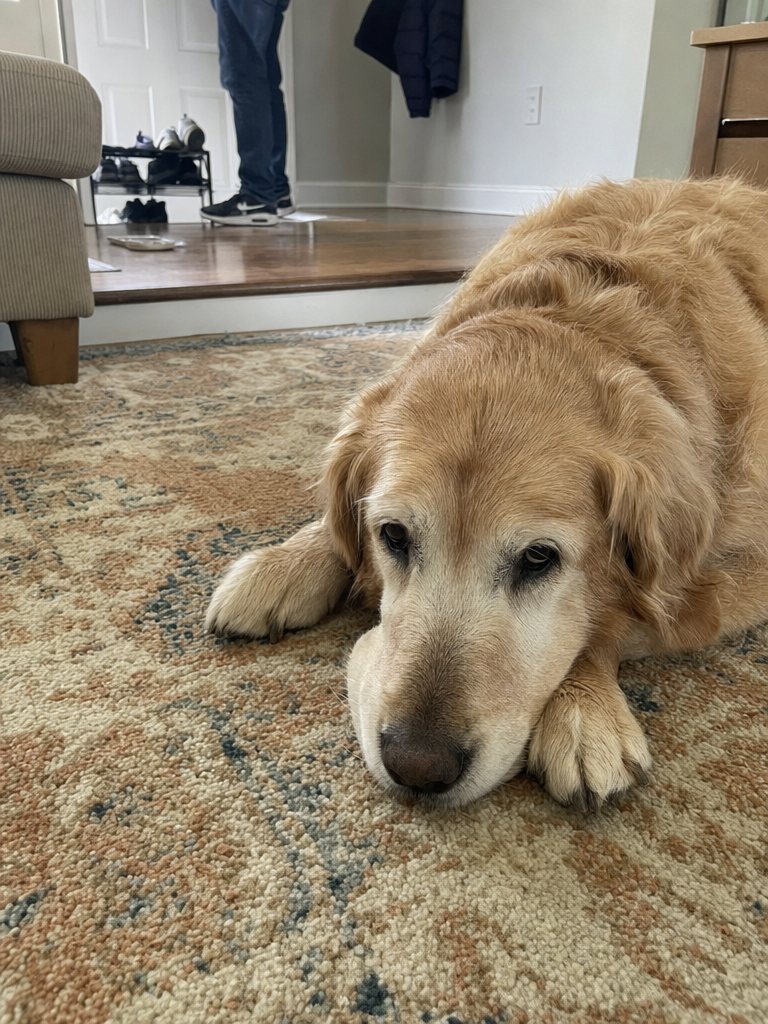
Max used to beat me to the door every day. The second my key hit the lock, I'd hear his collar jingling and his nails clicking across the floor. Then one winter, he just… stopped getting up.
It started right around his 8th birthday. I'd come home from work and he'd still be on his rug — tail wagging a little, but not actually coming to meet me like he always had. Getting up seemed to take him a beat longer every week. Then he started leaving half his breakfast in the bowl every morning, and skipping the second lap around the block on our walks.
At first I told myself, "Well, I guess he's just getting older." But honestly, watching him lose that little bit of daily joy really bothered me. A vet visit to rule out anything serious runs a few hundred dollars before you even get an answer, and if it turns into surgery, you're looking at $3,500 or more for a single procedure. I needed to understand what was actually happening before I spent any of that.
It's often not just "getting old"
A few weeks later, a friend who works at a vet clinic mentioned something that stuck with me: this isn't just one theory, it's something vets who focus on mobility bring up with their own clients. It turns out a lot of it comes down to the gradual breakdown of joint cartilage and connective tissue. As dogs age, their bodies naturally produce less collagen — the main structural protein that holds their joints together.
They made a point that completely changed how I looked at it: you can't reverse aging or turn back the clock, but you can give a dog's body the structural building blocks it needs to stay limber and comfortable for as long as possible.
That reframed the whole thing for me. I'd been treating the stiffness like something to just manage or wait out. It hadn't occurred to me that the raw material his body needed to repair itself was the thing running low.
What veterinary researchers actually say: NC State's veterinary research program lists "stiffness, especially after waking up" and difficulty "sitting, standing, running, jumping, getting into the car, or climbing stairs" among the early, often-missed signs of joint decline. Texas A&M's veterinary school notes a slower start to the day and difficulty rising in the morning as common early markers — easy to write off as "just getting older" when they're often the first visible sign of something specific happening underneath.
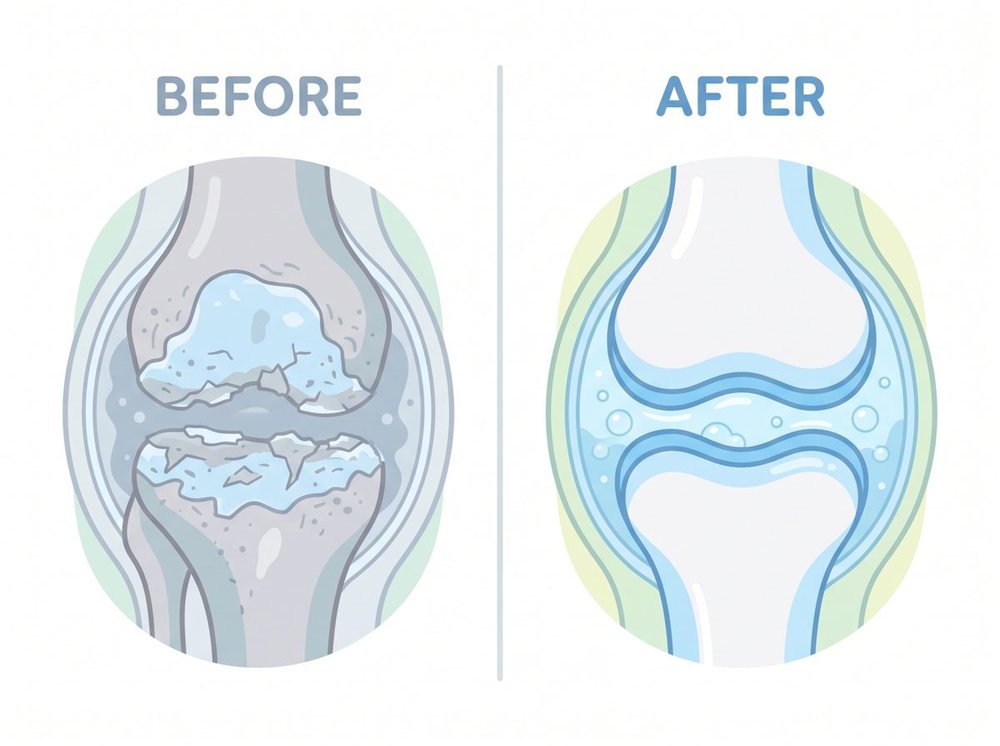
Illustrative diagram — not an actual scan or medical image
What I looked for
I was intrigued — but also anxious to make sure I found something legit before I put it in his food. So I went down a total research rabbit hole: reading dog forums, checking vet Q&A threads, comparing supplement labels line by line, cross-checking ingredient sourcing where brands actually listed it.
Most of the popular joint chews were packed with rice flour, potato starch, or leaned only on basic glucosamine. A few had a reasonable ingredient list but asked him to chew through a dense treat twice a day, which he mostly just held in his mouth and dropped.
I ended up choosing PupDrops because the formula had everything I was looking for: a clean liquid with collagen, paired with MSM, hyaluronic acid, vitamin C, and omega-3s — no baked fillers, no starches, and it went straight onto his food instead of asking him to chew anything new.
What settled it for me: it's made in a GMP-certified facility with third-party COA testing on every batch, not just a label full of marketing terms.
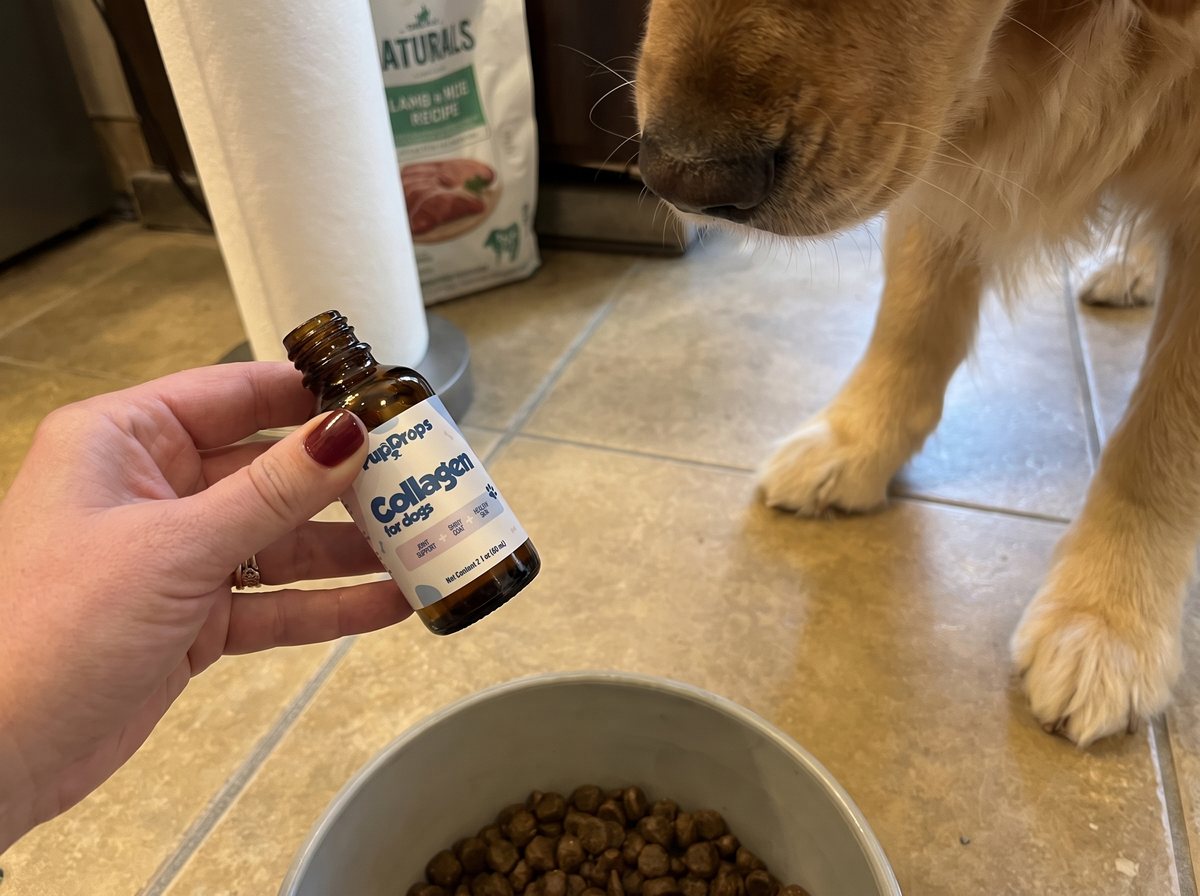
Liquid Collagen for Dogs by PupDrops
$29.25/tincture on the subscription plan — less than 1% of a single $3,500+ TPLO joint surgery
What's actually in it
- Bovine Bone Collagen (300 mg) — the main structural "mortar" for joint connective tissue.
- MSM (150 mg) — supports comfort and mobility alongside the collagen.
- Chicken Bone Type II Collagen (10 mg) — the cartilage-specific collagen type.
- Hyaluronic Acid (12 mg) — supports joint lubrication and hydration.
- Natural Bacon Flavor (20 mg) — dogs actually eat it off the bowl, no fighting, no wasted dose.
Doses per 1mL (1 full dropper). Full label also includes vitamin C, zinc, and biotin.
What real PupDrops customers are saying
★★★★★ 4.9 / 5 average from 234 verified reviews — over 20,000 dogs and counting
"I was skeptical at first, but after a few weeks I noticed my dog moving so much easier on our morning walks and he actually looks forward to it now, like it's a treat!"— Sarah, verified PupDrops review
The first real signs
Week 3: No more groaning. He wasn't taking those slow, stiff steps getting up off the rug after a nap.
Week 4: Noticeably more ease. Moving around the house without the hesitation.
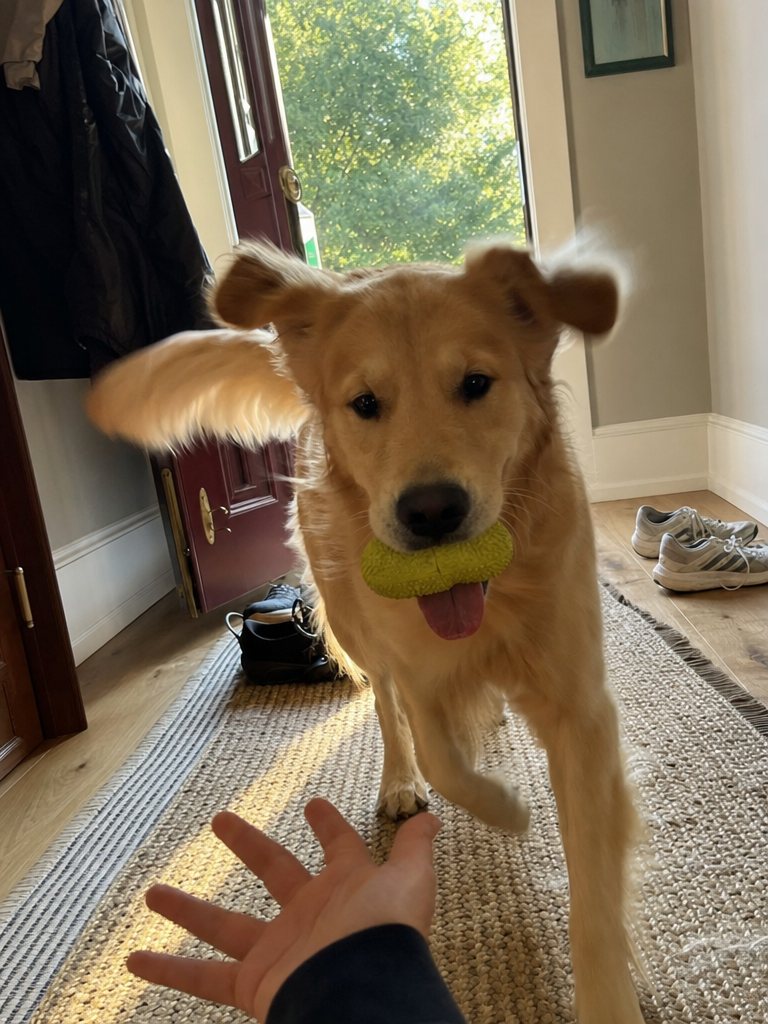
Week 4+: The door greeting came back. One afternoon I opened the door, and there he was, trotting up to me with his favorite squeaky toy, tail going, asking to play.
I want to be realistic: it's not some overnight miracle. He's still an older dog, and he has days where he just wants to sleep in. But the daily stiffness that used to weigh him down just isn't running his life anymore.
Why it works from the inside
- Structural support — collagen gives joints the building blocks they naturally lose with age.
- Easier mornings — less stiffness getting up off the rug after rest.
- The greeting comes back — not just physical improvement, the daily moments that matter.
The little greeting I thought was gone for good? It's back. He meets me at the door again, squeaky toy and all.
Common questions
Can I give this alongside medication my dog is already on?
PupDrops is a food-topper supplement, not a drug, but every dog's situation is different — especially if your dog is on a prescription joint medication. Check with your vet before adding any new supplement to their routine, the same way you would with any product.
PupDrops' current summer sale (up to 45% off) is live now — stock on this batch is limited, with around 135 bottles left for new customers before the next production run.
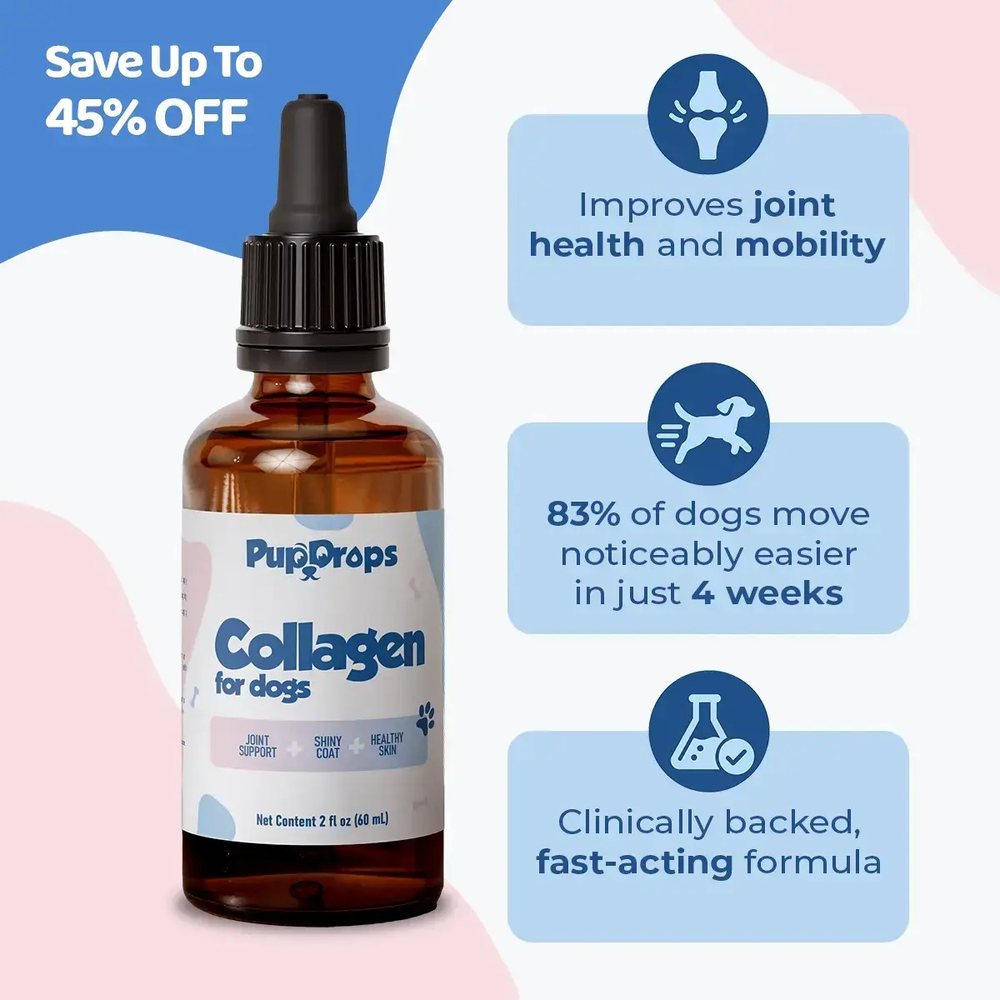
PupDrops' current promotional graphic — savings and product claims reflect the brand's own marketing
Trusted by 20,000+ dog owners · Recommended by veterinarians
Get PupDrops Liquid Collagen$29.25/tincture on the subscription plan (up to 45% off) · $39 one-time · free shipping · skip or cancel anytime
Backed by PupDrops' 30-day guarantee
P.S. If you think your dog is starting to slow down, I'll leave the link right above. If it gives your dog even a bit of what it gave Max, it's worth a try.
Privacy Policy · Terms of Service
© 2026 PupDrops LLC. All Rights Reserved.